Step back 10,000 years. Walk with the world's oldest hunter-gatherers, dance with proud warriors, and witness living traditions that have never changed — a privilege few travellers ever experience.
Years of Hadzabe Culture
Hadzabe Still Alive Today
Ethical Community Visits
Rated Cultural Experience
Living Heritage
The Maasai and the Hadzabe represent living cultural treasures — their traditions, languages, and way of life offer visitors a rare window into humanity's most enduring heritage.
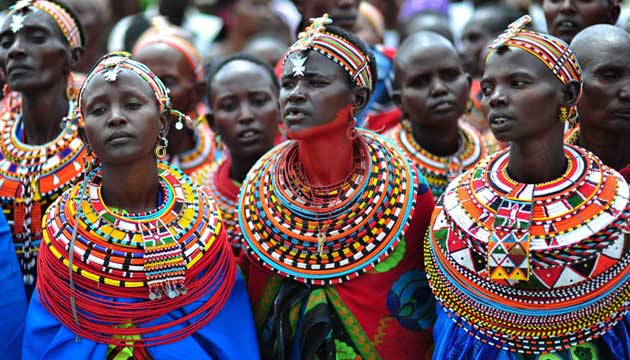
The Maasai are a Nilotic semi-nomadic pastoralist people who have inhabited the arid and semi-arid lands of Kenya and northern Tanzania for centuries. With a population of over 900,000, they are one of Africa's most instantly recognisable cultures — set apart by their striking red shuka (cloth) robes, elaborate multi-layered beadwork jewellery, and the world-famous Adumu jumping ceremony.
Maasai society is deeply structured around age-set groups and warrior classes. Young men, called moran, undergo intensive rites of passage — including a period of living in the bush — before graduating to full warrior status. Cattle are considered sacred wealth and form the basis of the Maasai diet (milk and blood), bride-price negotiations, and spiritual ceremonies. Despite pressure from modernisation, the Maasai have steadfastly preserved their Maa language, their oral traditions, and their distinctive identity across generations.
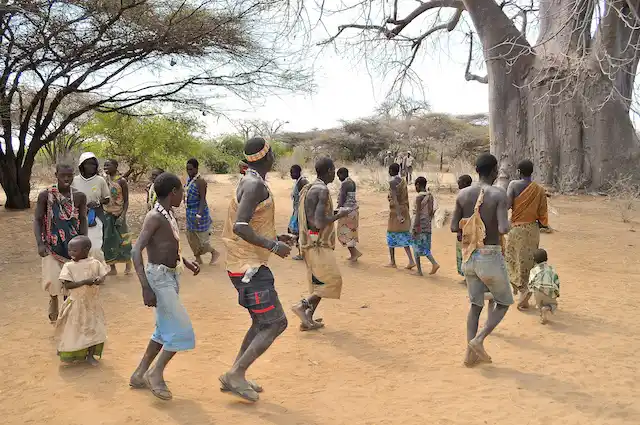
The Hadza (or Hadzabe) are the last truly nomadic hunter-gatherer people in Africa. With a population of only around 1,200–1,500 individuals, they live in the Lake Eyasi basin of Tanzania's Northern Rift Valley — one of the most ancient, continuously inhabited landscapes on Earth. Genetic research indicates the Hadza represent one of the deepest diverging human lineages, connecting modern humans to some of our earliest ancestors.
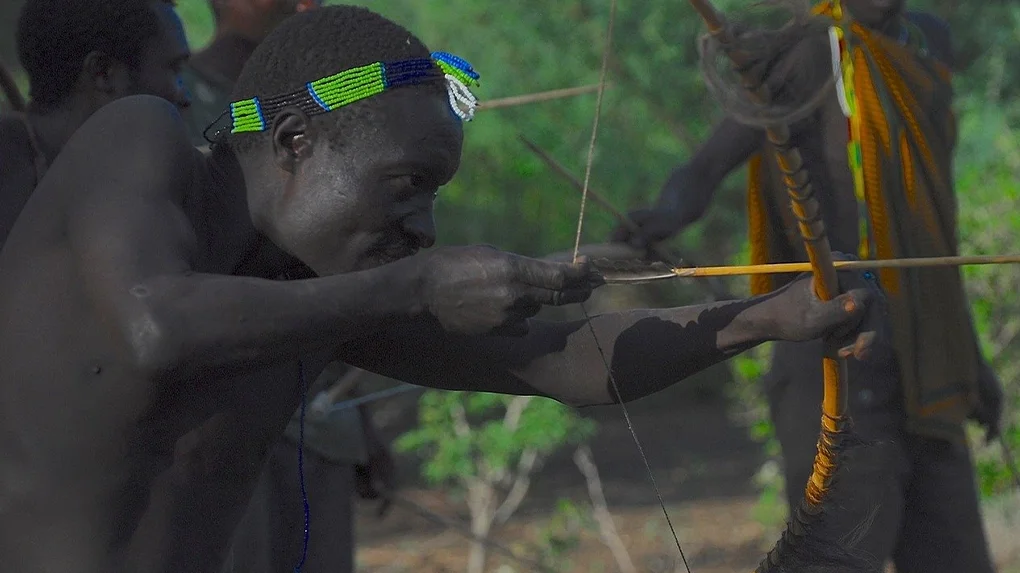
The Hadzabe speak Hadzane — a click-consonant language completely unrelated to any other language on Earth. They live without chiefs, permanent homes, or social hierarchy, moving day-to-day in small family bands across the bush. Each morning the men hunt using handcrafted bows and poisoned arrows, while the women gather wild tubers, baobab fruits, and honey from wild hives. Their egalitarian society, extraordinary ecological knowledge, and total freedom stand as a living reminder of how humanity once existed — and still can.
What You Will Do
Each activity is curated to be authentic, respectful, and deeply memorable — from the deep bush to the boma fireplace.
Join Hadzabe hunters at dawn as they track game through the bush using handmade bows, arrows, and extraordinary instincts developed over a lifetime.
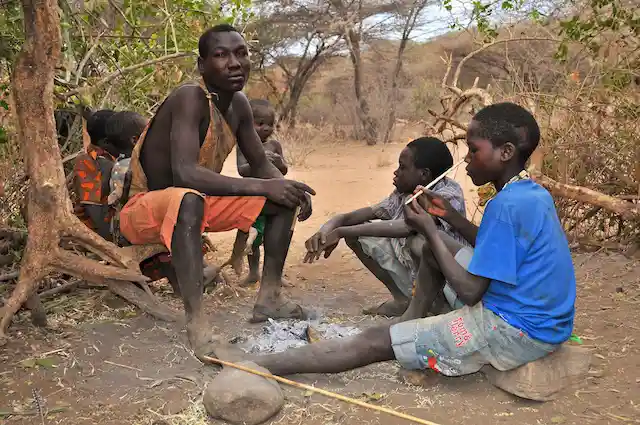
Watch and try the ancient Hadzabe technique of fire-making using two friction sticks — a skill unchanged for thousands of years.
Witness — and join — the spectacular Adumu jumping ceremony, where Maasai warriors compete in breathtaking vertical leaps accompanied by deep rhythmic chanting.
Step inside a traditional Maasai mud-dung home and learn how the Maasai build, live, cook, and protect their cattle enclosures.
Attempt the extraordinary Hadzane click-consonant language — one of Earth's rarest linguistic treasures — with help from a Hadzabe guide.
Observe Maasai women crafting intricate beaded jewellery and purchase authentic handmade pieces directly from the artisans.
Try shooting a Hadzabe bow under expert guidance. The lightness and precision of these handcrafted weapons will amaze you.
Forage edible plants, tubers, and wild honey with the Hadzabe — revealing an extraordinary human relationship with the African bush.
Receive a traditional blessing from a Maasai elder — a sacred, deeply moving moment connecting you to thousands of years of living cultural memory.
Your Day
From the moment our vehicle leaves Arusha in the predawn darkness, this is a day that will stay with you forever.
Your Lion Track guide picks you up before sunrise for the 3-hour drive west through the Rift Valley toward Lake Eyasi.
Meet the Hadzabe hunters at their camp. Walk through the bush, learn to track animals, and try your aim with a Hadzabe bow.
Sit around the fire with the community. Learn fire-making, attempt the click language, taste wild honey, and hear ancient stories.
Visit the Datoga tribe — neighbouring master blacksmiths who forge metal tools and jewellery using ancient forge techniques. Watch and purchase their craft.
Enjoy a packed lunch with stunning views of Lake Eyasi — a shallow soda lake often visited by flamingos and pelicans.
Arrive at the Maasai village. Tour the Boma, meet beadwork artisans, and witness — or join — the Adumu jumping dance with the community's warriors.
Drive back through golden-hour savanna, arriving in Arusha by evening — transformed by a day that connects you to humanity's deepest roots.
— Lion Track Safari Cultural Guide"The Hadzabe do not simply live in nature — they are nature. Walking with them is the closest any modern human being can come to understanding the original human experience."
Why Choose Us
A direct percentage of every tour fee goes to the visited community — ensuring visits genuinely benefit the tribes.
Our guides are trained in cultural protocol. We always ask permission, respect boundaries, and brief visitors before each interaction.
Our bilingual guides speak both Kiswahili and local tribal languages, ensuring authentic, unfiltered cultural exchange.
We keep groups small (2–8 people) so every visitor has an intimate, personal experience — not a rushed group tour.
Tell us your preferred dates and group size. We will craft a personalised cultural itinerary including expert guides, community permits, transfers, and optional safari extensions.
Explore More
Every safari is unique — combine your cultural tour with one of our celebrated wildlife packages
Common questions about visiting Tanzania's most iconic living cultures.