Serengeti National Park Safari

"The Land Where Savannahs Never End" • 14,750 km² of Wild Africa • The Great Wildebeest Migration • Africa's Predator Capital

Park Size
14,750 km² (5,700 sq mi)
Predator Density
3,000+ Lions • 1,000+ Leopards
The Great Migration
1.5M+ Wildebeest • 300K Zebras
Airstrips
Seronera, Kogatende, Ndutu, Grumeti
Endless African Plains

The Living Epicenter of African Wildlife

Derived from the Maasai word "Siringit" (meaning "the place where the land moves on forever"), Serengeti National Park is a pristine wilderness of unparalleled ecological significance. Located in northern Tanzania and stretching seamlessly to the Kenyan border (where it meets the Maasai Mara), this 14,750 km² protected ecosystem supports the largest concentration of migratory mammals remaining on Earth.

The landscape encompasses treeless short-grass plains, towering granite inselbergs (kopjes), riverine woodlands along the Seronera and Grumeti rivers, and rolling acacia hills in the northern reaches near the Mara River.

Every year, the ancient biological clock compels millions of wildebeest, zebras, and gazelles to complete a 1,000-kilometer circular trek following seasonal rains in search of fresh pasture and water, closely shadowed by lions, cheetahs, leopards, hyenas, and African wild dogs.

UNESCO World Heritage Criteria

Inscribed in 1981, the Serengeti is protected for its universal value: the uninterrupted predator-prey dynamics, exceptional biodiversity of over 70 large mammal species, and more than 500 bird species.
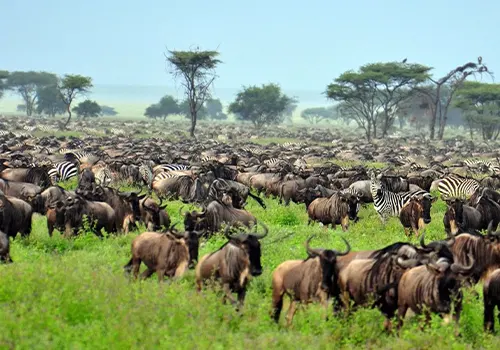
Serengeti National Park Great Migration Herd
Serengeti Elephants
Serengeti Luxury Tented Camp
Regional Geography

Exploring the Four Sectors of the Serengeti

To truly master your safari itinerary, understanding the distinct geography, climate, and wildlife movement of each sector is essential.

1. Central Serengeti (Seronera Valley)

Year-Round Capital

The Seronera Valley is the undisputed predator capital of Africa. Because the Seronera River provides year-round water, a dense resident population of herbivores remains permanently here. This abundant prey base supports the highest concentration of leopards resting on sausage tree branches, cheetahs on the Makoma Plains, and formidable lion prides patrolling the granite Moru Kopjes.

Key Landmarks:

Retina Hippo Pool (hundreds of hippos in close-quarters wallows), Moru Kopjes (Rhino conservation zone with ancient Maasai rock paintings), and Seronera Airstrip.

  • Best Timing: Superb 365 days a year
  • Signature Wildlife: Leopards, lions, cheetahs, servals, hippos, baboons
  • Featured Lodging: Four Seasons Safari Lodge, Serengeti Serena, Sound of Silence

2. Northern Serengeti (Kogatende & Mara River)

Jul – Oct Peak

A dramatic region of rolling hills, acacia groves, and granite kopjes bisected by the legendary Mara River. Between July and October, over a million wildebeest and zebras gather along the steep riverbanks. The ensuing river crossings represent nature's ultimate high-stakes drama, with animals braving turbulent currents and giant Nile crocodiles.

Key Landmarks:

Mara River Crossing Points (Numbered 1 to 10), Lamai Wedge (secluded game viewing north of the river), and Bologonja Springs.

  • Best Timing: July to late October (River Crossings)
  • Signature Wildlife: River crossings, giant Nile crocodiles, black rhinos, lions
  • Featured Lodging: Sayari Migration Camp, Lemala Kuria Hills, Mara River Tented

3. Southern Serengeti & Ndutu Plains

Jan – Mar Peak

Extending from southern Serengeti into the Ndutu area of the Ngorongoro Conservation Area, these fertile short-grass plains are enriched by volcanic ash from the Crater Highlands. From January to March, the entire migration herd congregates here for the synchronized calving season, where over 500,000 wildebeest calves are born in a 3-week window.

Key Landmarks:

Lake Ndutu (soda lake surrounded by acacia woodland), Lake Masek, and Kusini Kopjes (resident cheetah haven).

  • Best Timing: January to March (Calving & High Predator Action)
  • Signature Wildlife: Newborn calves, cheetah sprint hunts, bat-eared foxes, hyenas
  • Featured Lodging: Ndutu Safari Lodge, Lake Ndutu Luxury Tented, Sanctuary Kusini

4. Western Corridor (Grumeti & Mbalageti Rivers)

May – Jun Peak

Stretching westward towards the shores of Lake Victoria, the Western Corridor features riverine gallery forests, black cotton soil valleys, and the Grumeti River. In May and June, migrating herds bottleneck along the Grumeti, engaging in the first major river crossings and the dramatic mating season (the rut).

Key Landmarks:

Grumeti River Pools, Kirawira Plains, and Ndabaka Gate (entry point from Lake Victoria side).

  • Best Timing: May to June (Grumeti Crossings & Rutting Season)
  • Signature Wildlife: Black-and-white colobus monkeys, giant crocodiles, topi, lions
  • Featured Lodging: Singita Grumeti, Mbalageti Safari Lodge, Kirawira Serena
Safari Planning Calendar

Serengeti Month-by-Month Migration & Weather Guide

Track the migration movement, rainfall, temperatures, and wildlife highlights across the four seasons.

Month Herd Location Key Wildlife Event Avg Temp (°C) Rainfall
January Southern Serengeti & Ndutu Herds spread across short-grass plains; pregnant females prepare to give birth. 15°C – 28°C Moderate
February Ndutu & Southern Plains Peak Calving Season: 8,000+ calves born daily; intense predator action. 15°C – 29°C Low-Moderate
March Southern Plains to Central Calves gain strength; herds begin moving northwest toward Seronera. 16°C – 28°C Moderate (Rains begin)
April Central Serengeti & Moru Kopjes Herds mass in central valleys; lush green landscapes, fewer tourists. 16°C – 26°C High (Green Season)
May Western Corridor & Grumeti Massive columns move toward Grumeti River; spectacular rutting/mating season. 15°C – 26°C Moderate-Low
June Grumeti & Northern Serengeti Grumeti River crossings begin; herds head north through Ikorongo. 14°C – 26°C Dry Season Begins
July Northern Serengeti (Kogatende) Mara River Crossings Begin: First dramatic crossing spectacles. 13°C – 25°C Very Low (Dry)
August Mara River & Lamai Wedge Peak River Crossings: Multiple daily crossings; intense crocodile encounters. 14°C – 26°C Dry
September Northern Serengeti & Mara Herds cross back and forth across Mara River between Tanzania and Kenya. 14°C – 27°C Dry
October Northern Serengeti to Lobo Herds begin migrating south through Eastern Serengeti as short rains approach. 15°C – 28°C Occasional Showers
November Eastern & Central Serengeti Herds travel through Lobo and Seronera toward the southern plains. 15°C – 27°C Short Rains
December Southern Serengeti & Ndutu Herds arrive on the southern short-grass plains; lush green grazing resumes. 15°C – 28°C Moderate
Unforgettable Adventures

Signature Experiences in Serengeti National Park

Elevate your safari with extraordinary activities that bring you closer to nature.

Sunrise Hot Air Balloon Safari

Float silently at dawn above the golden savannah, tracking wildlife from an eagle's perspective. Finish with a five-star champagne bush breakfast in the wild.

Available Year-Round • Central & North

Guided Bush Walking Safaris

Step out of the 4x4 with armed park rangers and expert trackers. Learn the secrets of animal tracks, medicinal plants, bird calls, and microscopic ecosystems.

Designated Wilderness Zones

Luxury Mobile Migration Tented Camps

Stay directly in the path of the moving herds. Enjoy en-suite glamping luxury with gourmet dining, campfire stargazing, and sounds of lions roaring in the distance.

Ndutu (Jan-Mar) • Kogatende (Jul-Oct)
Official Packages

Serengeti National Park Safari Packages

Complete packages with customized 4x4 Land Cruisers, expert wildlife guides, airport transfers, luxury & midrange tented lodges, and all national park fees included.

4-Day Great Migration Serengeti Safari 4 Days
Top Bestseller
4-Day Great Migration Serengeti Safari
Serengeti & Crater From $1,450 /pp
View Package
5-Day Signature Serengeti Safari 5 Days
#1 Recommended
5-Day Signature Serengeti Safari
Classic Circuit From $1,850 /pp
View Package
4-Day Fly-In Luxury Serengeti Safari 4 Days
Luxury Fly-In
4-Day Fly-In Luxury Serengeti Safari
Fly-In & Glamping From $2,650 /pp
View Package
5-Day Ndutu Calving Season Serengeti Safari 5 Days
Calving Season
5-Day Ndutu Calving Season Safari
Ndutu & Southern Plains From $1,950 /pp
View Package
Tailor-Made Safari Quote

Book Your Dream Serengeti Safari

Tell us your travel dates and preferred camp style, and our safari experts will craft a personalized day-by-day itinerary with exact lodge availability and transparent pricing.

Call / WhatsApp: +255 682 801 818 • Email: info@liontracksafaritanzania.com

Help & Advice

Serengeti Safari FAQs

Everything you need to know before visiting Serengeti National Park.

The Great Migration is year-round: July to October is best for dramatic Mara River crossings in Northern Serengeti (Kogatende), and January to March is prime for the Ndutu Calving Season in Southern Serengeti when over 8,000 wildebeest calves are born daily.

We recommend at least 3 to 5 full days in the Serengeti. This allows you to explore Central Serengeti (Seronera) for resident big cats and spend dedicated time in seasonal hotspots like Kogatende (Mara River) or Ndutu.

Yes! Serengeti is home to healthy populations of lions (over 3,000), leopards, elephants, and African buffalo. Black rhinos reside primarily in the Moru Kopjes sanctuary in south-central Serengeti and northern frontier zones.

Seronera (Central) offers outstanding resident leopard, lion, and cheetah sightings year-round. Kogatende (North) is the epicenter of dramatic Mara River crossings (July-October). Grumeti (West) features lush riverine forest, giant crocodiles, and May-June rutting. Ndutu (South) hosts the massive calving herds from January to March.

The balloon safari begins with a 5:00 AM pickup, launching at sunrise for a 60-minute floating flight over the boundless savannah and wildlife below. Upon landing, guests enjoy a traditional champagne toast followed by a full English bush breakfast under an acacia tree.

Both are excellent! Driving from Arusha via Lake Manyara and Ngorongoro Crater provides stunning overland scenery. Alternatively, fly-in safaris using local airstrips (Seronera, Kogatende, Ndutu, Grumeti) maximize time on game drives and minimize road travel.