Lake Manyara National Park Safari

Tree-Climbing Lions • Pink Flamingo Shorelines • Treetop Canopy Walkway • Groundwater Forest

Area
330 km² (200 km² Lake)
Famous Feature
Tree-Climbing Lions
Avian Species
400+ Bird Species
Canopy Walkway
370m Suspended Bridge
Rift Valley Escarpment

Ernest Hemingway Called It "The Loveliest Lake in Africa"

Tucked below the sheer 600-meter cliffs of the Great Rift Valley, Lake Manyara National Park offers a micro-safari experience packed with astonishing ecological diversity. In just a few hours, you traverse underground springs supporting a dense mahogany and fig forest, open savannah floodplains, and the expansive soda lake.

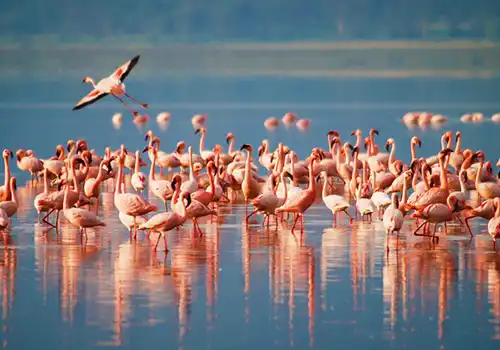
The park is legendary for its famous tree-climbing lions resting high on the branches of umbrella acacias, the largest concentration of baboons in Africa, thousands of pink-hued flamingos feeding on algae, and the bubbling waters of the Maji Moto sulfur hot springs.

Tanzania's First Treetop Canopy Walkway

Experience a thrilling walk through the lush forest canopy along a 370-meter suspension bridge 18 meters above the ground, spotting rare blue monkeys and silvery-cheeked hornbills.
Lake Manyara Flamingos and Wildlife
Signature Highlights

What to Experience at Lake Manyara

Unique wildlife behaviors and thrilling activities you won't find anywhere else.

Tree-Climbing Lions

Rare Behavior

One of only two places in East Africa where lions regularly climb trees. Spotting a full-grown lion sleeping on an acacia branch high above the safari track is an unforgettable photographic trophy.

  • Highlights: Acacia tree perches, predator vantage points

Treetop Canopy Walkway

Adventure Walk

Walk among ancient trees on a series of suspension bridges with viewing decks. Discover butterflies, hornbills, and primates at eye level in the upper forest canopy.

  • Highlights: 370m suspended bridge, 18m height, forest canopy

Lush Groundwater Forest

Primate Capital

Fed by clear underground springs percolating from the Ngorongoro highlands. Home to troops of hundreds of olive baboons, playful blue monkeys, and bushbucks.

  • Highlights: Giant baboon troops, wild figs, blue monkeys

Flamingo Lake & Hot Springs

Soda Lake & Geothermal

The alkaline lake attracts millions of pink flamingos and pelicans. Further south, the bubbling Maji Moto geothermal springs steam at 60°C against the Rift Valley wall.

  • Highlights: Pink flamingos, Maji Moto hot springs, pelicans
Pacchetti Safari Ufficiali

Lake Manyara National Park Safari Packages

Discover our handpicked Lake Manyara and Northern Circuit safari packages featuring custom 4x4 Land Cruisers, expert wildlife guides, safari lodges, and all national park fees included.

4-Day Northern Tanzania Safari 4 Giorni
Più Venduto
4-Day Northern Tanzania Highlights Safari
Manyara, Tarangire & Crater From $1,420 /pp
Vedi Pacchetto
5-Day Signature Serengeti & Ngorongoro Safari 5 Giorni
#1 Consigliato
5-Day Signature Serengeti Safari
Manyara, Serengeti & Crater Da 1.850 $ /pp
Vedi Pacchetto
4-Day Elephants to Crater Safari 4 Giorni
Wildlife Classic
4-Day Elephants to Crater Safari
Tarangire & Ngorongoro From $1,350 /pp
Vedi Pacchetto
7-Day Discover Northern Tanzania Safari Adventure 7 Giorni
Complete Circuit
7-Day Discover Northern Tanzania Safari
Manyara, Serengeti & Crater From $2,450 /pp
Vedi Pacchetto
Tailor-Made Safari Planning

Book Your Lake Manyara Safari

Combine Lake Manyara with Tarangire, Ngorongoro, and Serengeti for a rich and varied Northern Circuit safari.

Telefono / WhatsApp: +255 682 801 818 • Email: info@liontracksafaritanzania.com

Aiuto & Consigli

Lake Manyara Safari FAQs

Answers to common questions about visiting Lake Manyara National Park.

I leoni del Manyara si arrampicano sui rami delle acacie per riposare all'ombra, godere della brezza rinfrescante ed evitare le punture degli insetti durante le ore più calde del giorno.

È un ponte sospeso lungo 370 metri che si snoda tra le chiome della foresta freatica ad un'altezza di 18 metri, offrendo una vista emozionante su uccelli, scimmie e la vegetazione lussureggiante.

Sì! Data la vicinanza ad Arusha (circa 125 km, 2 ore di auto), il parco si presta perfettamente sia a safari giornalieri sia come prima tappa di un itinerario più lungo verso Ngorongoro e il Serengeti.

Il parco conta oltre 400 specie, tra cui centinaia di migliaia di fenicotteri rosa maggiori e minori, pellicani, aironi goliath, cicogne becco a sella e aquile pescatrici africane.

La vicina cittadina di Mto wa Mbu offre vivaci tour culturali a piedi o in bicicletta tra piantagioni di banane rosse, risaie, mercati locali e atelier di artigiani Makonde.

Da giugno a ottobre per l'avvistamento dei grandi mammiferi lungo le rive del lago; da novembre a maggio per gli appassionati di birdwatching e per ammirare le cascate e la vegetazione lussureggiante.